
Introduction
For many investors, the focus tends to be on markets—when to enter, when to exit, and which opportunities to pursue.
Over time, however, it becomes evident that outcomes are shaped less by timing decisions and more by how investments are structured. This is where asset allocation becomes central.
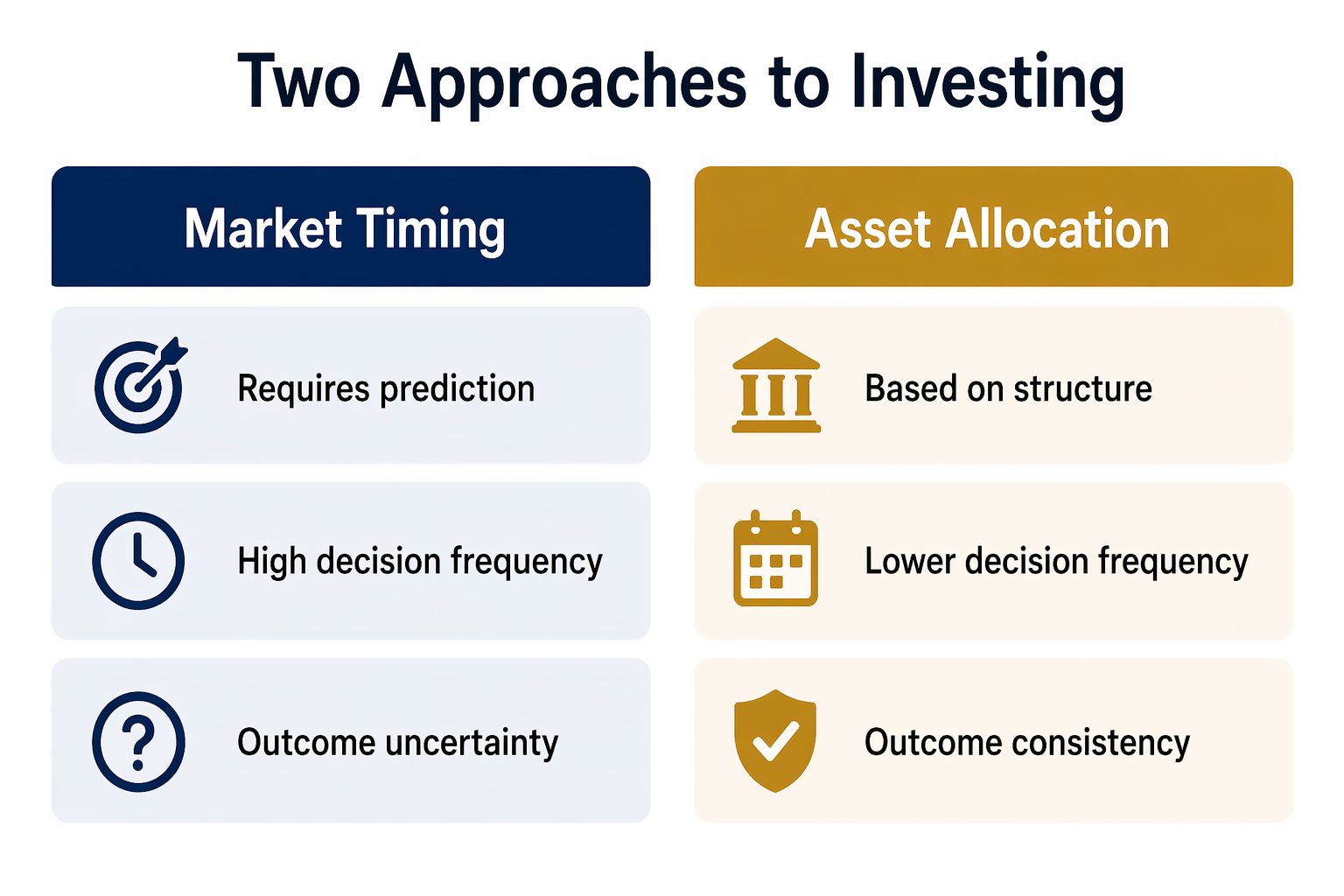
The Illusion of Timing
Market timing is appealing because it suggests control.
If one could consistently anticipate market movements, investment outcomes would improve significantly. In practice, however, such consistency is difficult to achieve.
Markets are influenced by multiple variables—economic data, policy changes, global developments, and investor sentiment. These factors interact in ways that are not always predictable.
As a result, timing-based decisions often lead to inconsistency.
What Asset Allocation Does Differently
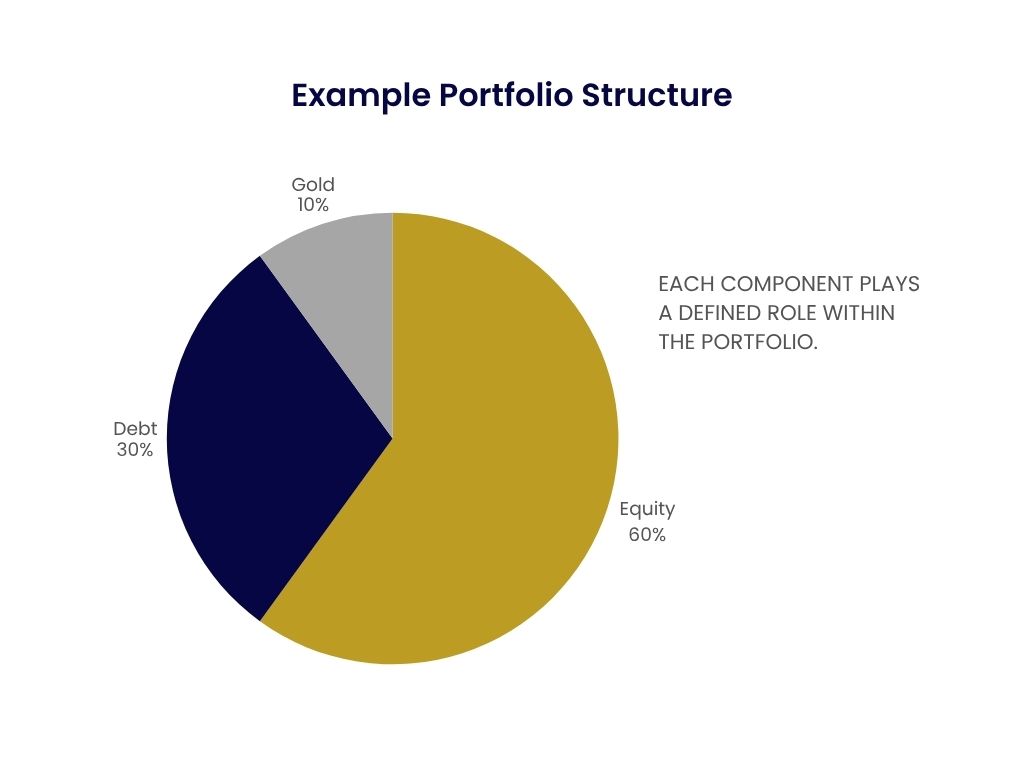
Asset allocation shifts the focus from prediction to structure.
Instead of asking what markets will do next, it asks:
- How should capital be distributed?
- What role does each asset class play?
- How does the portfolio behave across conditions?
A well-constructed allocation ensures balance.
What Asset Allocation Does Differently
- How should capital be distributed?
- What role does each asset class play?
- How does the portfolio behave across conditions?

The Role of Discipline
Even a well-designed allocation requires consistency.
In practice, investors tend to:
- Increase exposure after markets rise
- Reduce exposure during declines
These actions are typically driven by short-term developments rather than long-term objectives.
Discipline ensures continuity.
A More Reliable Approach
Over time, investors who follow a structured allocation approach tend to experience:- Greater consistency
- Lower decision stress
- Better alignment with long-term goals
Conclusion
Investment outcomes are shaped by structure, consistency, and time. Asset allocation provides a framework that allows decisions to be made with clarity, rather than reaction.