
Introduction
India’s transition toward clean energy is increasingly becoming a central theme in its economic and policy landscape.
Driven by a combination of energy security concerns, environmental commitments, and long-term growth objectives, this transition represents a structural shift rather than a cyclical development.
For investors, the relevance lies not in identifying short-term opportunities, but in understanding how such a transition may influence portfolios over time.
A Structural Shift, Not a Passing Theme
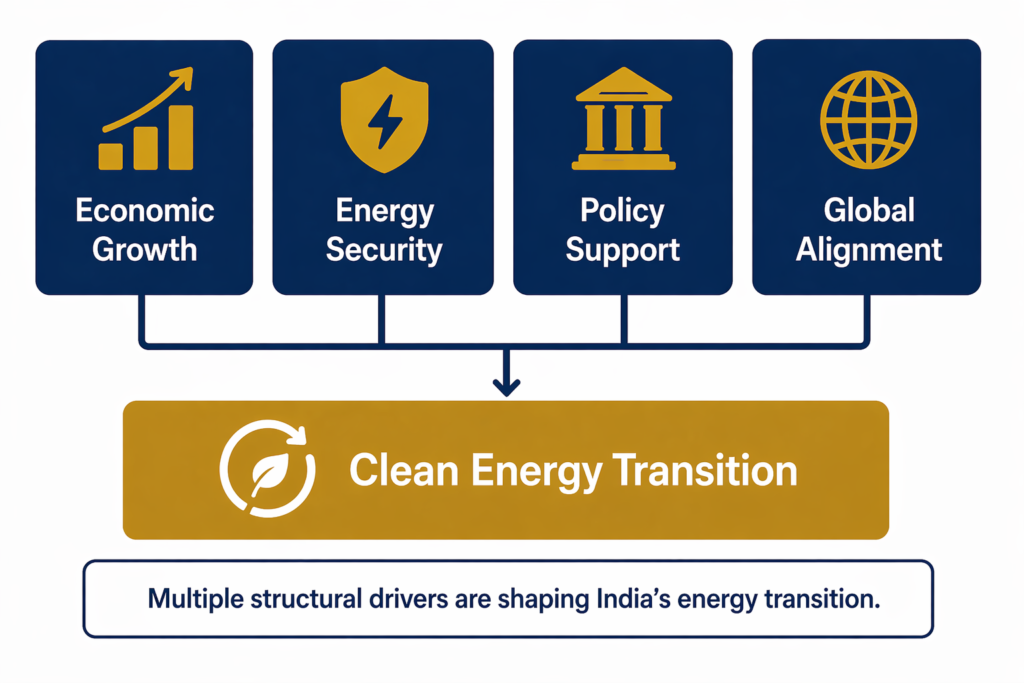
The move toward clean energy is supported by multiple long-term drivers:
- Rising energy demand linked to economic growth
- Dependence on energy imports, particularly fossil fuels
- Policy initiatives encouraging renewable capacity
- Global alignment toward sustainability
These factors suggest that the transition is not dependent on a single variable. It is part of a broader reconfiguration of how energy is produced, distributed, and consumed.
Drivers of Clean Energy Transition
The Scale of Investment Required
A transition of this nature requires significant capital. Investment is needed across:
- Renewable energy generation (solar, wind, hybrid)
- Transmission and distribution infrastructure
- Energy storage systems
- Supporting technologies and supply chains
This creates sustained demand for capital over an extended period, rather than a short-term investment cycle.
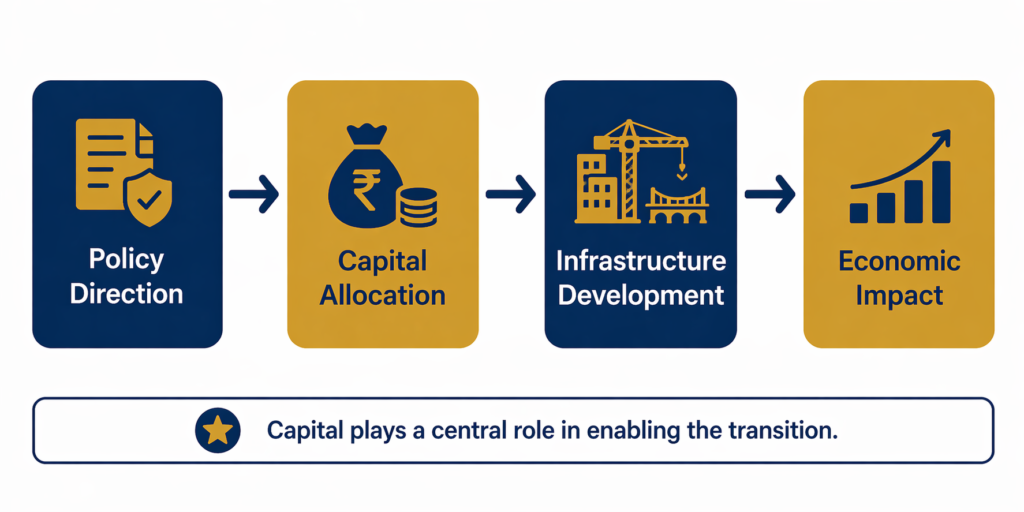
Capital Allocation and Financing
Given the scale, financing becomes a critical component.
The transition is likely to involve:
- Public sector investment
- Private capital participation
- Debt financing across infrastructure projects
- Global capital flows into sustainability-linked initiatives
This reinforces the importance of capital markets in enabling long-term structural change.
Capital Flow Structure
Implications Across Sectors
The impact of the clean energy transition is not limited to a single sector.
It extends across:
- Power generation and utilities
- Industrial sectors adapting to new energy sources
- Financial institutions supporting project financing
- Ancillary industries linked to infrastructure development
As a result, the effects are distributed rather than concentrated.
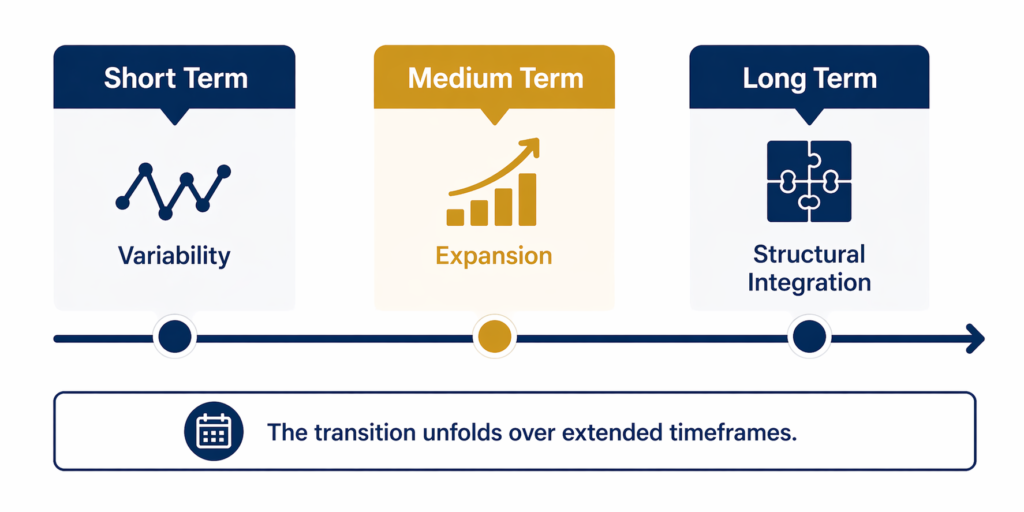
Time Horizon and Uncertainty
While the direction of transition appears clear, the pace and path may vary.
Factors influencing this include:
- Technological advancements
- Policy execution
- Cost dynamics
- Global economic conditions
This introduces a degree of uncertainty in the short to medium term, even as the long-term
trajectory remains intact.
Time Horizon of Transition
Avoiding a Narrow Investment View
Themes such as clean energy can sometimes lead to concentrated investment approaches.
However, a narrow focus on a single theme may:
- Increase portfolio concentration
- Introduce sector-specific risks
- Reduce diversification
A more balanced approach is to recognise the theme within the broader context of overall asset
allocation.
Integrating the Theme into a Portfolio
Rather than treating clean energy as a standalone allocation, it can be viewed as:
- A component within broader equity exposure
- Part of long-term structural growth themes
- One of several factors influencing sectoral dynamics
This ensures that participation in the theme is aligned with overall portfolio structure.
A Structured Perspective
The clean energy transition represents a meaningful economic shift, but it does not eliminate the
need for discipline. A structured investment approach involves:
- Maintaining diversification
- Aligning with long-term objectives
- Avoiding concentration driven by thematic narratives
Over time, such an approach allows portfolios to participate in structural changes without becoming dependent on any single theme.
Conclusion
India’s clean energy transition is likely to remain an important part of its economic evolution.
Its implications for capital allocation, infrastructure development, and sectoral dynamics are significant, but they will unfold over time.
For investors, the focus should remain on understanding these developments within a broaderframework—ensuring that portfolios remain balanced, diversified, and aligned with long-term goals.
At Assetnova Capital, we view structural themes such as clean energy within the context of overall portfolio design—ensuring that participation is measured, diversified, and aligned with long-term objectives.