
Introduction
Global markets are influenced by a range of factors, but few have as wide-reaching an impact as geopolitics and energy prices.
Periods of geopolitical tension—whether due to conflicts, trade dynamics, or policy shifts—often coincide with movements in oil prices. These developments tend to draw attention, not only because of their immediate effects, but also because of their broader economic implications.
For investors, the key question is not how to predict these events, but how to understand their impact within a portfolio context.
Why Oil Prices Matter?
Oil occupies a central role in the global economy.
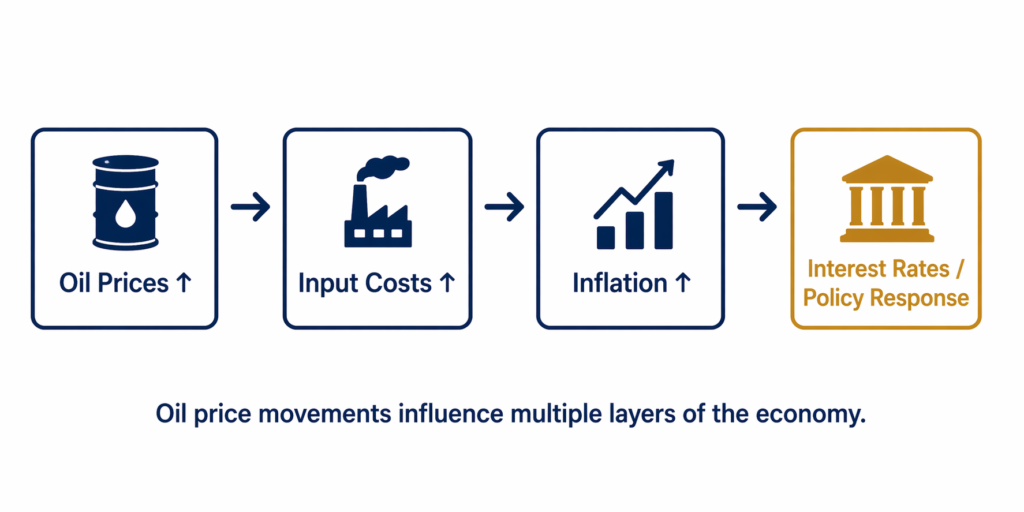
Changes in oil prices influence:
- Transportation and logistics costs
- Input costs for businesses
- Consumer inflation
As a result, sustained increases in oil prices can contribute to higher inflation levels across
economies.
For countries like India, which are net importers of oil, this impact can be more pronounced.
Transmission of Oil Prices
The Link to Inflation and Interest Rates
When inflation rises, central banks may respond by adjusting monetary policy.
This can include:
- Maintaining higher interest rates
- Delaying rate cuts
- Tightening liquidity conditions
Such actions affect different asset classes in different ways
- Equity markets may adjust to changing growth expectations
- Debt markets respond to interest rate movements
- Currency dynamics may shift
The impact is rarely uniform and often evolves over time.
Market Reactions vs Economic Impact
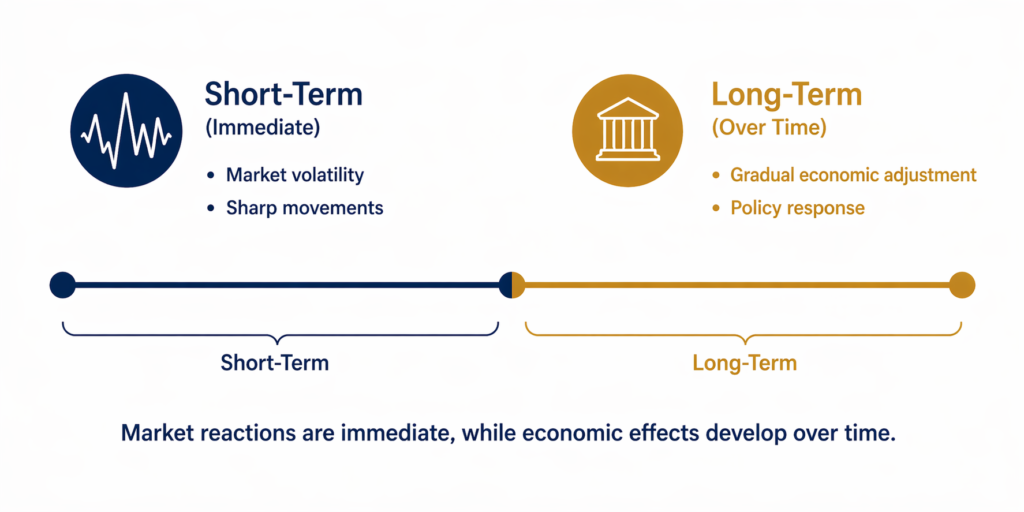
Market reactions to geopolitical events are often immediate.
However, the economic impact tends to unfold gradually.
Short-term market movements may reflect:
- Sentiment shifts
- Uncertainty
- Risk aversion
Longer-term outcomes depend on:
- Duration of the event
- Policy responses
- Broader economic resilience
Distinguishing between reaction and impact is important for decision-making.
Reaction vs Impact
Implications for Different Asset Classes
Geopolitical developments and rising oil prices can influence portfolios through multiple channels.
Equity
- Sectors may respond differently
- Input cost pressures may affect margins
- Export-oriented businesses may react differently from domestic ones
Debt
- Interest rate expectations influence bond yields
- Inflation outlook affects real returns
Currency and External Factors
- Oil imports can affect currency stability
- Global capital flows may shift in response to uncertainty
These effects are interconnected and rarely move in isolation.
The Role of Diversification
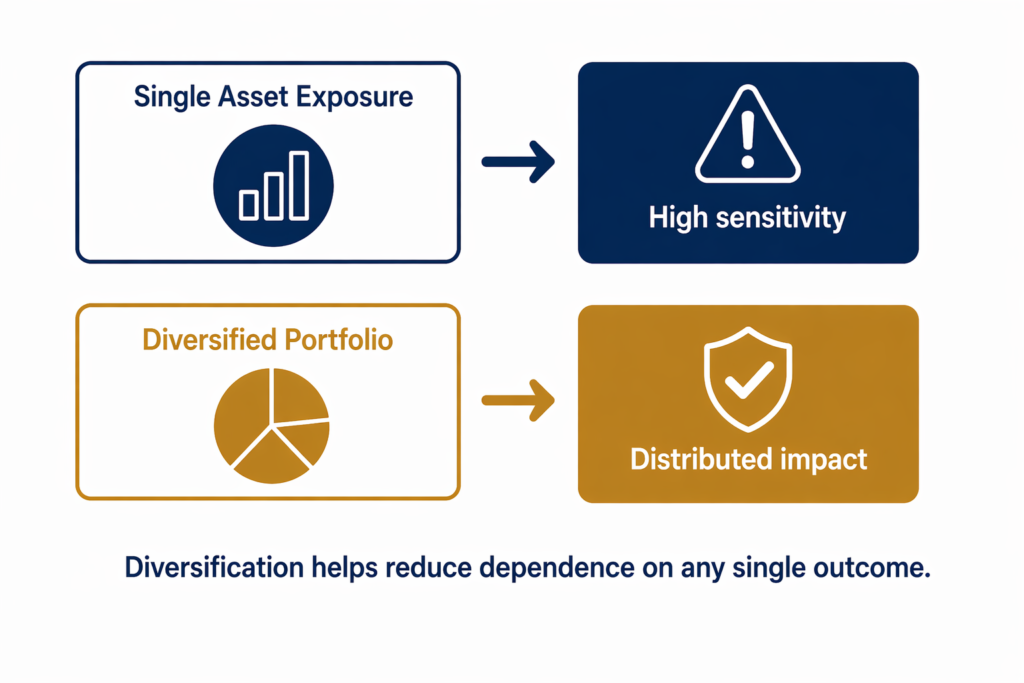
Given the range of potential impacts, diversification becomes critical.
A well-structured portfolio:
- Does not rely on a single economic outcome
- Balances exposure across asset classes
- Is designed to absorb different types of shocks
Diversification does not eliminate volatility, but it helps manage its impact.
Portfolio Resilience
Avoiding the Urge to React
Geopolitical developments often create a sense of urgency.
However, reacting to such events can lead to:
- Frequent portfolio changes
- Decisions driven by short-term developments
- Misalignment with long-term objectives
Since the trajectory of such events is difficult to predict, frequent adjustments may introduce more uncertainty than they resolve.
A Structured Perspective
A more effective approach is to view such developments within a broader framework.
This involves:
- Maintaining a well-defined asset allocation
- Reviewing portfolios in the context of long-term goals
- Avoiding decisions driven solely by current events
Over time, markets tend to adjust to changing conditions. A structured approach allows portfolios to participate in this adjustment without requiring constant intervention.
Conclusion
Geopolitics and oil prices will continue to influence markets and economies.
Their impact can be significant, but it is also complex and often unpredictable.
For investors, the focus should remain on building portfolios that are resilient to such developments—rather than attempting to anticipate them.
A disciplined, well-structured approach provides a more reliable way to navigate periods of uncertainty.
At Assetnova Capital, we focus on helping clients maintain clarity and structure in their portfolios—especially during periods when external developments dominate market narratives.