
Introduction
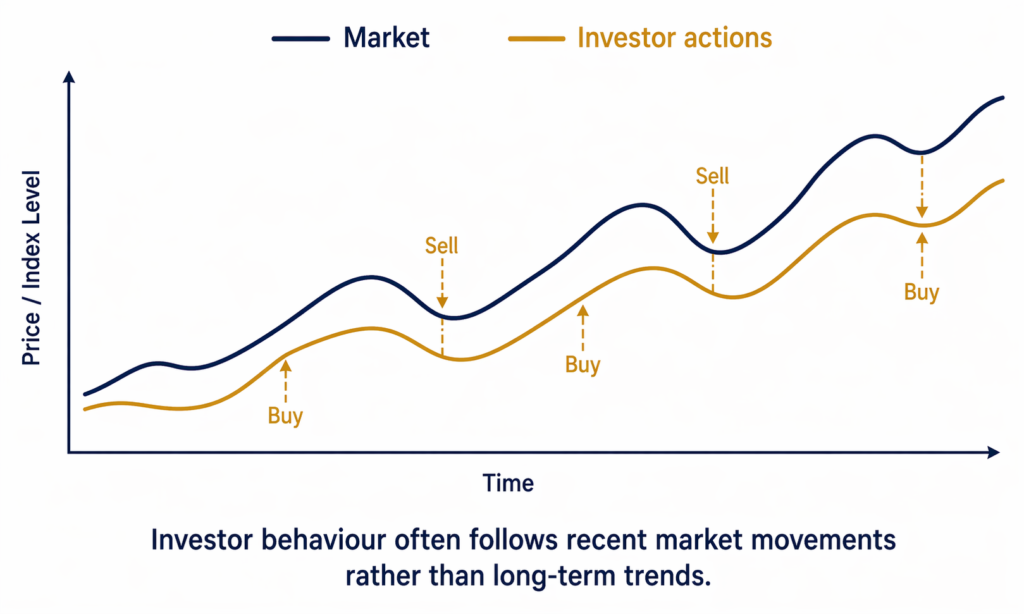
Periods of market movement—whether upward or downward—tend to trigger a natural response from investors.
When markets rise, there is a tendency to participate more.
When markets decline, there is an instinct to step back.
While these reactions feel intuitive, they often come at a cost.
The Nature of Market Movements
Markets do not move in straight lines.
They are influenced by a range of factors—economic conditions, policy decisions, global events, and investor sentiment. As a result, periods of volatility are not exceptions; they are a normal part of market behaviour.
Attempting to respond to each movement introduces a level of activity that may not align with long-term objectives.
Market Movement vs Investor Reaction
The Hidden Cost of Reaction
The Hidden Cost of Reaction
The cost of reacting to markets is not always visible immediately.
It tends to accumulate over time through:
- Missed participation during recoveries
- Entering markets after significant upward movement
- Increased transaction activity without clear strategic purpose
Individually, these may appear as small decisions. Collectively, they can materially affect long-term outcomes.
Why Reaction Feels Rational
Market reactions are often driven by the desire to reduce uncertainty.
During declines, reducing exposure can feel like risk management.
During rising markets, increasing exposure can feel like opportunity capture.
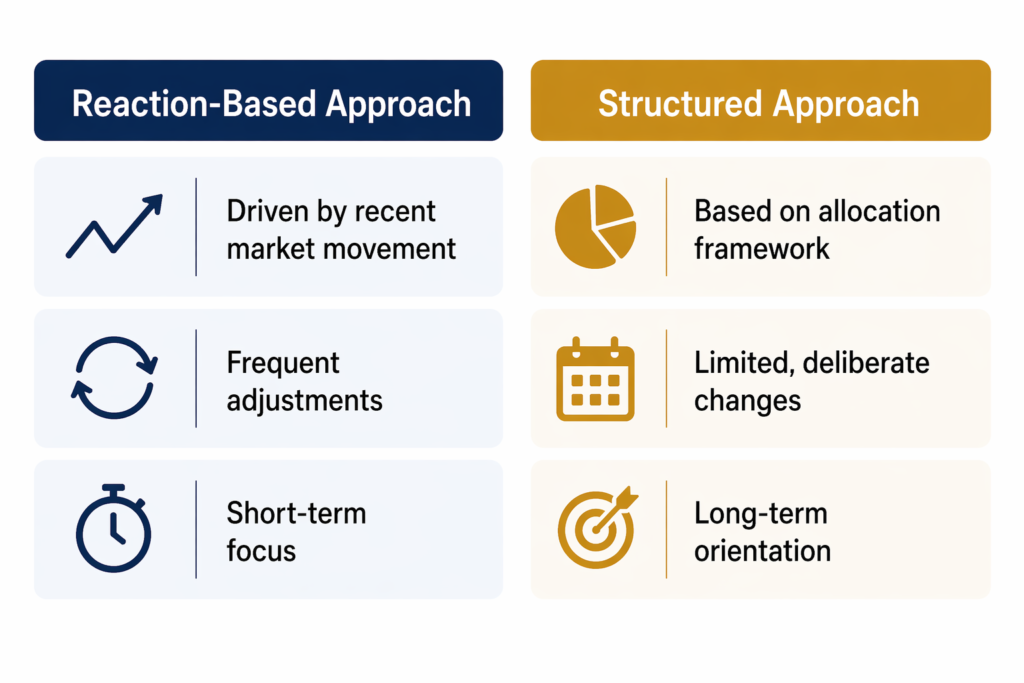
However, these actions are typically based on recent developments rather than a structured framework.
Short-Term vs Long-Term Thinking
The Role of Structure
A structured investment approach provides a reference point for decision-making.
Instead of reacting to market conditions, it focuses on:
- Maintaining appropriate allocation
- Aligning with long-term goals
- Making adjustments only when underlying objectives change
This reduces the need for frequent decisions and helps maintain consistency.
The Importance of Staying Invested
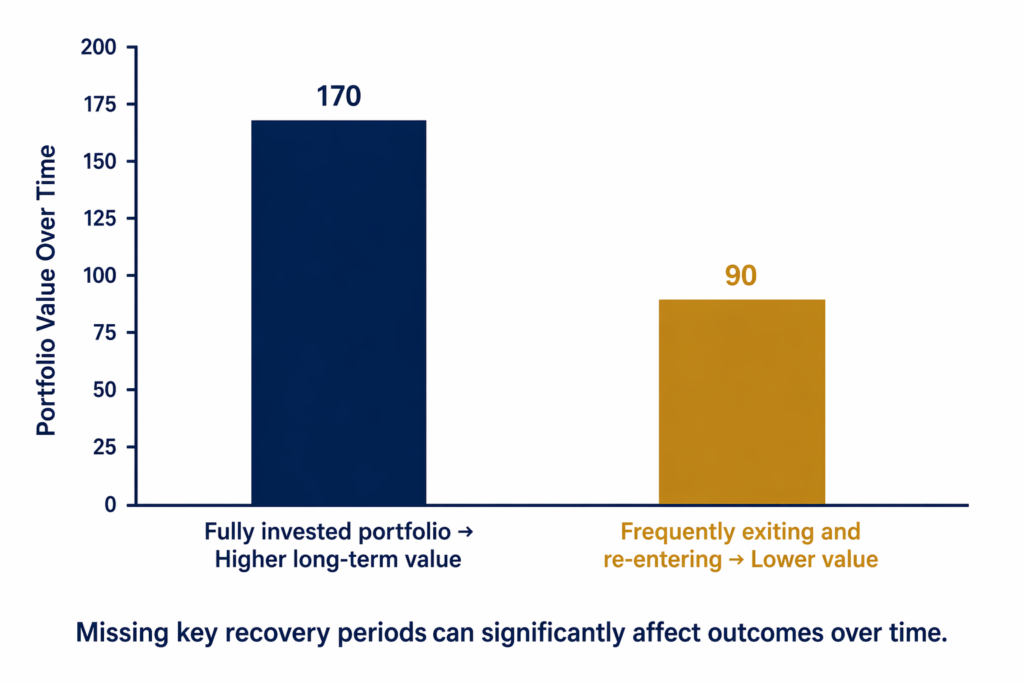
One of the most significant risks of reacting to markets is missing periods of recovery.
Market recoveries are often concentrated in relatively short timeframes. Missing even a few such periods can have a disproportionate impact on long-term outcomes.
Impact of Missing Recovery Periods
A More Measured Approach
A disciplined investment approach does not eliminate uncertainty, but it provides a way to navigate it.
By focusing on:
- Structure over reaction
- Consistency over activity
- Long-term alignment over short-term response
Investors can reduce the impact of behavioural decisions on their portfolios.
Conclusion
Market movements will continue to create moments of uncertainty.
The question is not whether these moments will occur, but how they are approached.
Reacting to markets may provide a sense of control in the short term, but over time, it often introduces inconsistency.
A structured approach, supported by discipline, provides a more reliable path to long-term outcomes.
At Assetnova Capital, our focus is on helping clients remain aligned with a well-defined investment approach—especially during periods when reacting feels most natural.